Skip to content
How it works

A record, not a message

Every analyst posts into one channel using one notation. A call is not a shout — it is a typed record with an entry plan, an invalidation, targets and a thread that stays open until the trade is closed and counted. Everything below is a real capture, unedited.

1The signal

Everything you need to act, in one message

Instrument and side, an entry plan that may be laddered across several limits, the invalidation that ends the idea, and the targets. Where the analyst's chart and the message text disagree, the bot says so rather than quietly picking one.
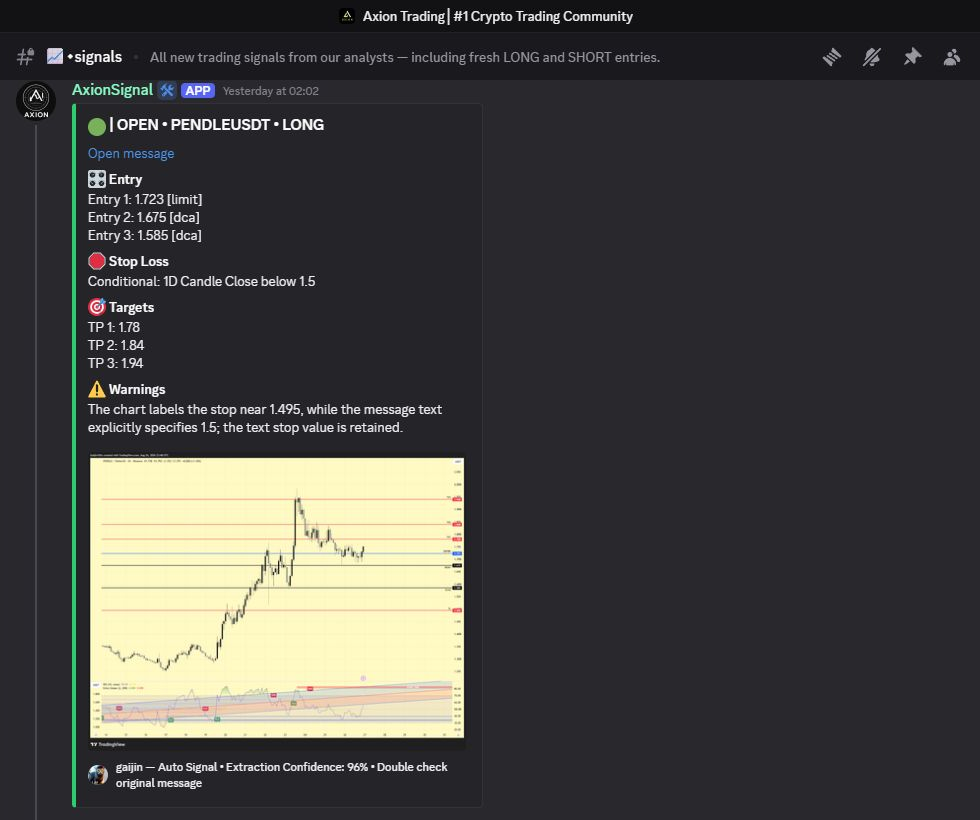
ENTRYOne limit, or a ladder with stated DCA levels. Averaged by weight when the ledger scores it.
STOPA price, or a condition such as a daily candle close beyond a level. This is the 1R unit everything is measured in.
TARGETSUp to three, with the split published so partial exits are scored the same way for everyone.
A real AxionSignal record posted in the signals channel

real capture · nothing redacted

2The thread

Updated while it is still uncomfortable

Fills, partials, stops moved to break-even, and the warnings — posted as they happen, in the trade's own thread, with timestamps. A trade that goes against the analyst is updated exactly as often as one that works.

Nothing is edited away afterwards. If a signal is corrected, the correction is recorded against the original ID and both remain visible.
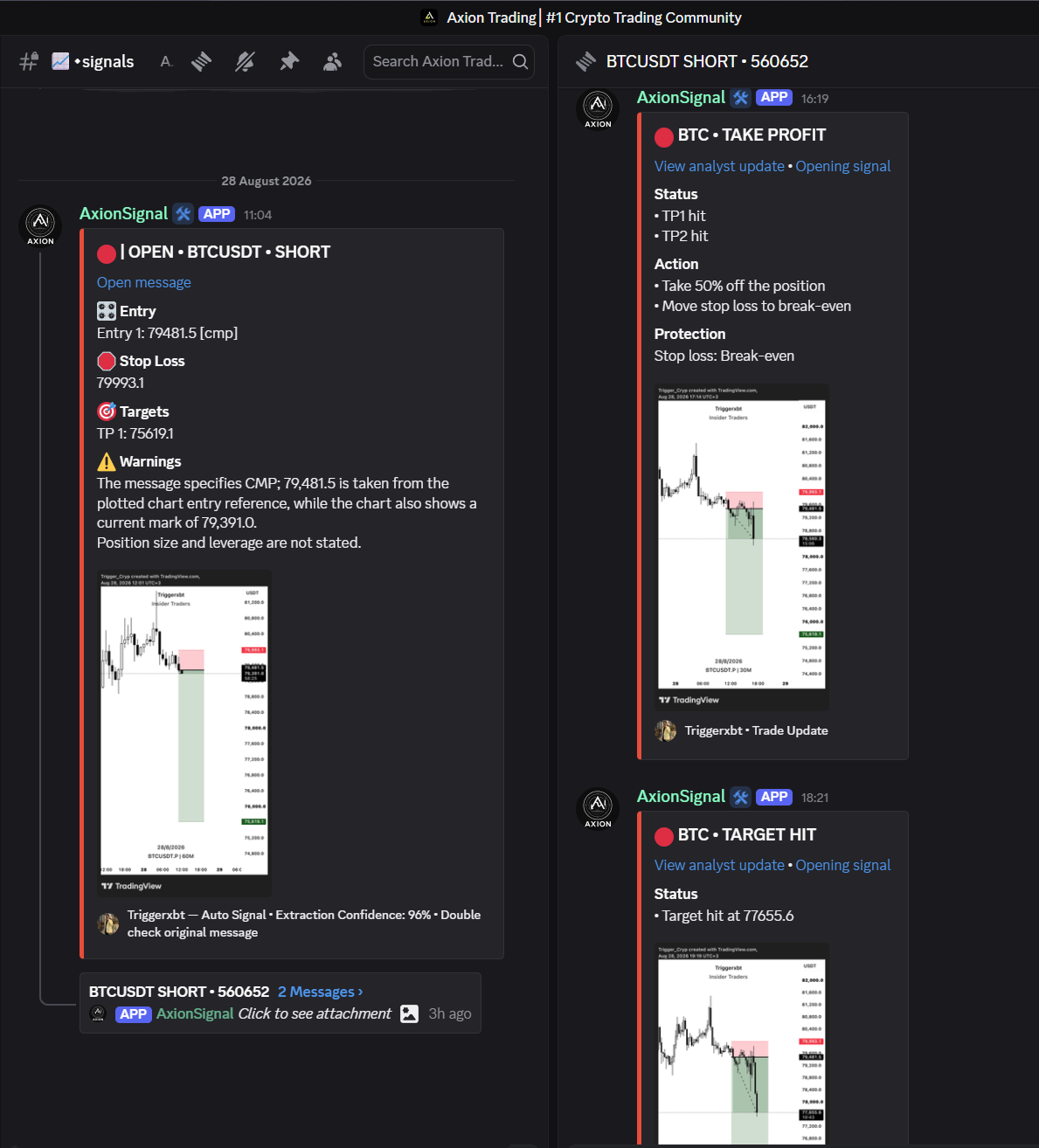
A real Axion trade thread with lifecycle updates

the thread stays with the trade until it closes

3The close

Counted the same day, win or lose

The result is written into the ledger in R multiple and raw price move. Stop-outs land as −1R by definition. Cancellations and expiries are recorded separately so they can never quietly improve a win rate.

See the ledger →
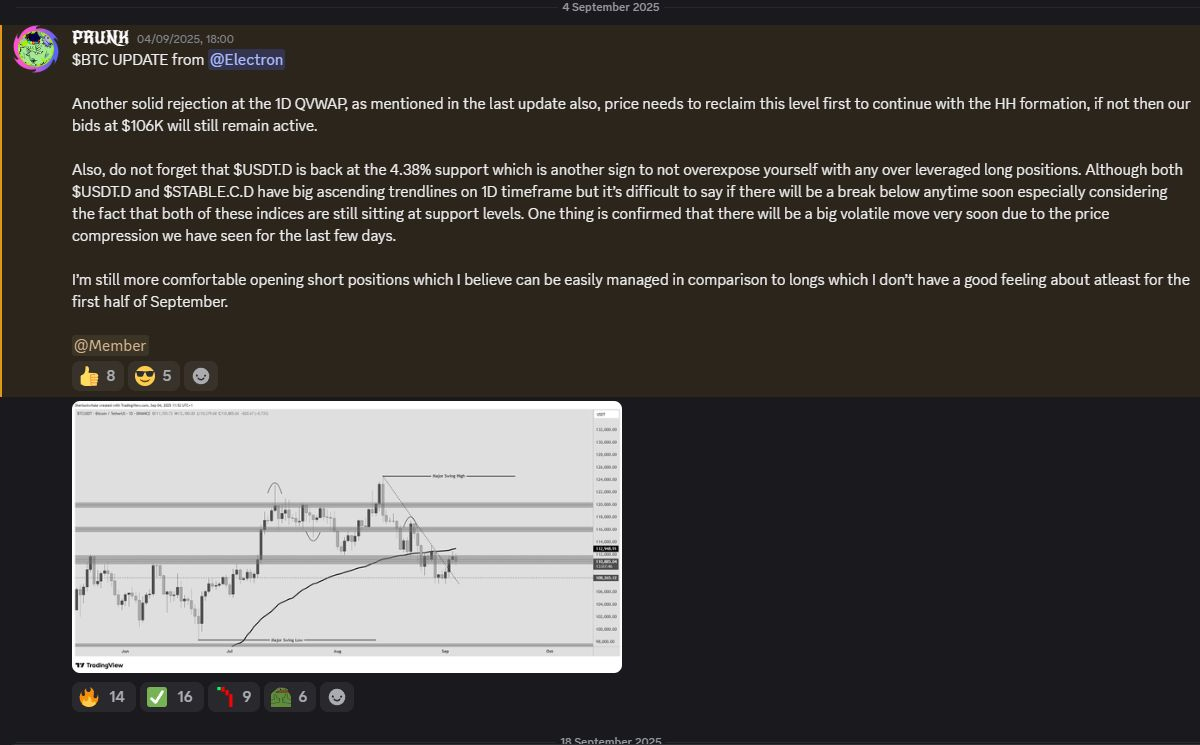
A real market update posted by an Axion analyst

market context, posted between the calls

The notation, in full

Learn these six states once and every call from every analyst reads the same way.

OPEN

Posted and live. Entry may be partially filled or still waiting at a limit.

TP1 HIT

First target reached. The published split says how much came off here.

BREAK-EVEN

Stop moved to entry. The trade can no longer lose, and it may still close at 0R.

CLOSED

Fully exited. The result is written into the ledger the same day.

STOPPED

Invalidation hit. Scored as −1R, with no exception and no quiet deletion.

CANCELLED

Never filled, or the setup expired. Recorded separately from wins and losses.
Walkthrough · RVNUSDT · 31 Jul – 12 Aug 2026

One trade, open to close

A real D3LTA short on RVN, every message it produced, in order. The analyst writes the call; the bot files it, opens a thread and starts watching the levels; the analyst says what he is doing as it moves and the bot records what actually happened. Nothing is tidied up afterwards — including the DCA entry that never filled.

1

The analyst posts the call

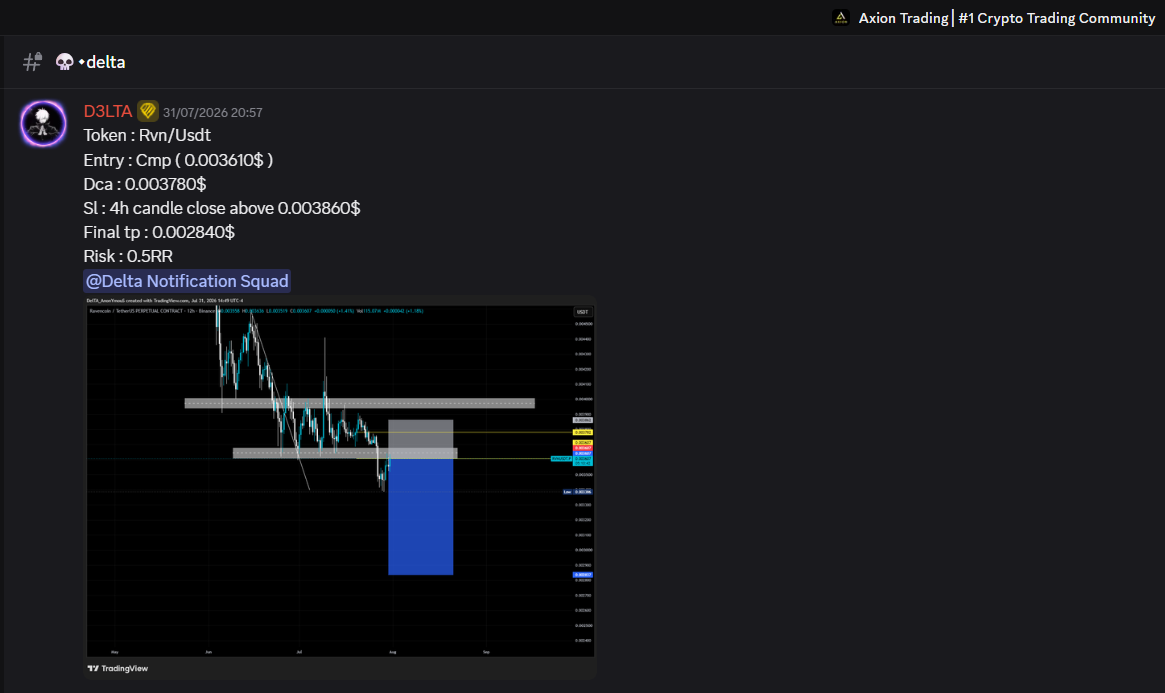
D3LTA writes the trade out in his own channel: the pair, the entry, a DCA level, the invalidation as a 4H candle close, and where he is taking profit. This is the record everything downstream is built from.

D3LTA posts the RVNUSDT short with entry, DCA, stop and target
2

The bot files it and starts watching

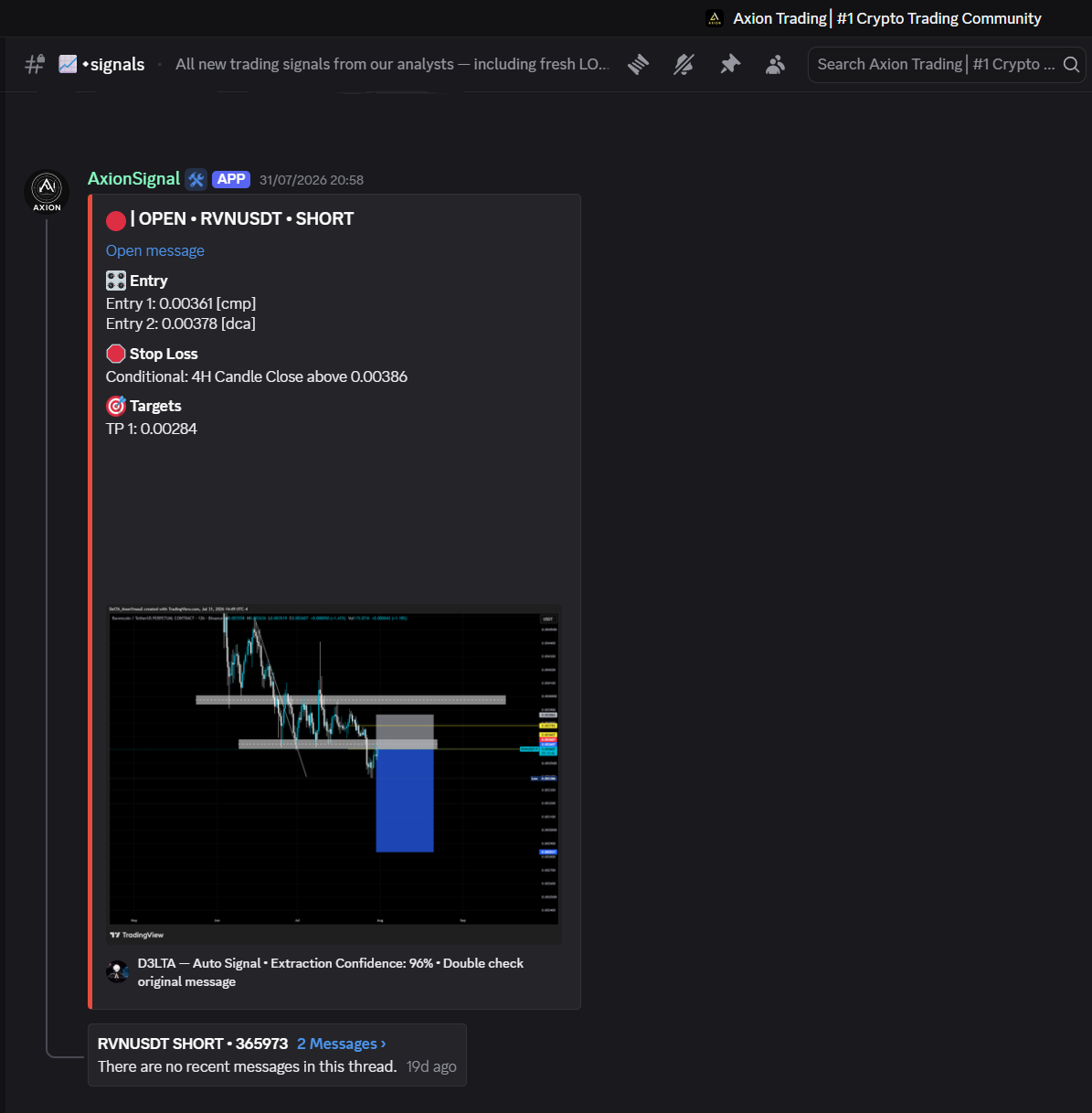
AxionSignal reads that message, turns it into a structured card in the signals channel, and opens a thread for the trade. From this moment the levels are being watched against live price - nobody has to remember to check.

The same trade as a structured signal card in the signals channel
3

Updates land in the same place

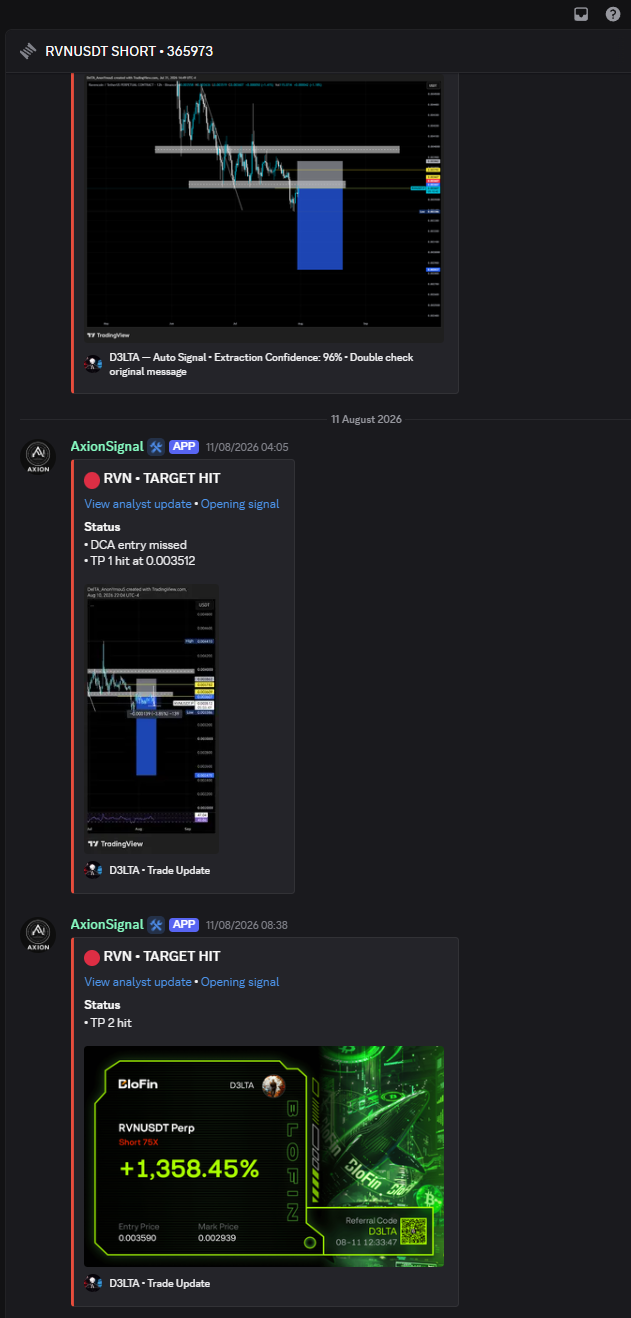
As the trade moves, the analyst says what he is doing and the bot records what actually happened - including the DCA entry that was never filled, reported as missed rather than quietly dropped. Each target is marked as it is reached.

The bot records the missed DCA entry, then TP1 and TP2 as they hit
4

One thread holds the whole trade

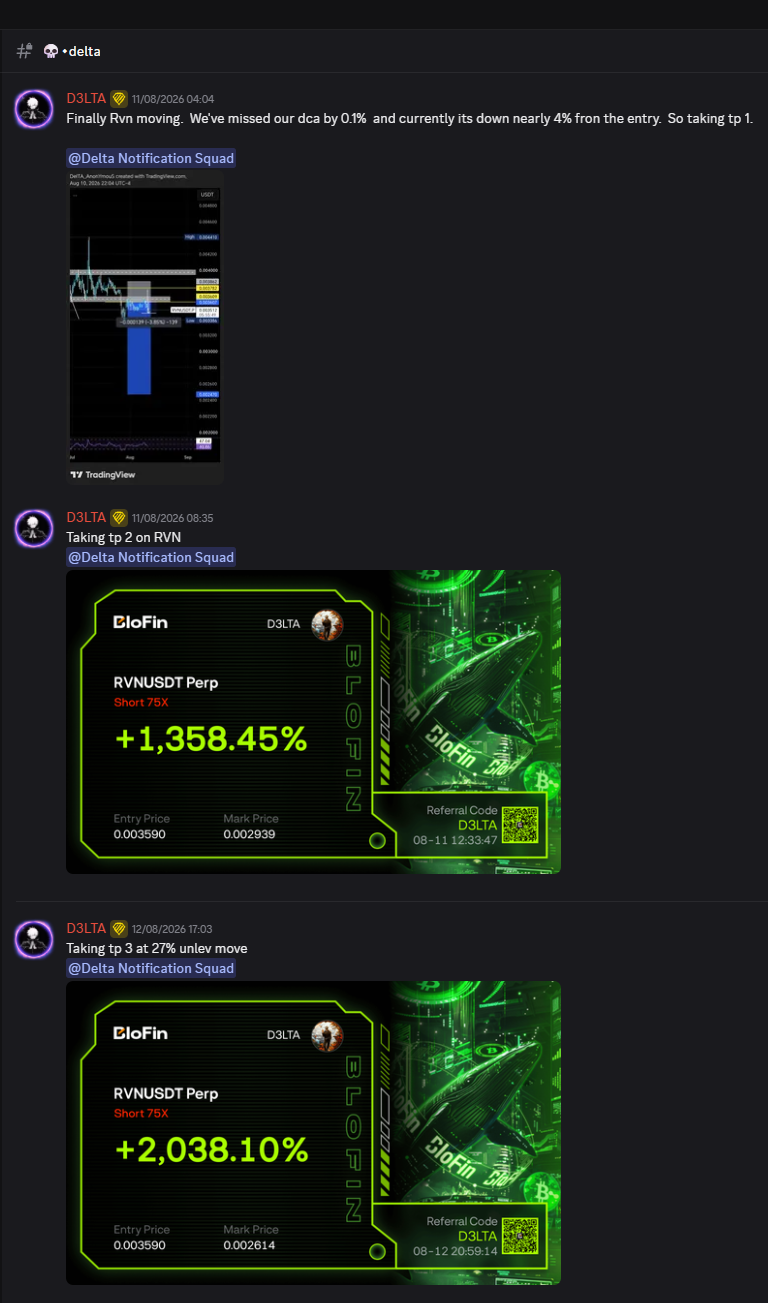
Every message about this position lives in its thread, in order, from the call to the last exit - so a trade is one thing you can read start to finish instead of something scattered through a busy channel.

D3LTA takes TP1, TP2 and TP3, posting each exit
Entry
0.003590
Stop
0.003860
Exit
0.002614
Move
+27.2%
Result
+3.6R

The figures above are the price move and the R multiple, which is all this site ever reports. The exchange cards in the last panel are D3LTA’s own position at 75x leverage, so they show a percentage of his margin rather than of the move — the same trade, counted a different way. Leverage multiplies a loss exactly as fast, and nobody should read those numbers as what following a call returns. The cards also carry his own exchange referral code, which is his rather than Axion’s.

And then the point of it

The call is the least interesting part

Anyone can post a price. What makes a member independent is the reasoning: why this level, why that invalidation, why the size was what it was. Every lesson in the library is built off the same trades you can see in the ledger.

Browse the library →
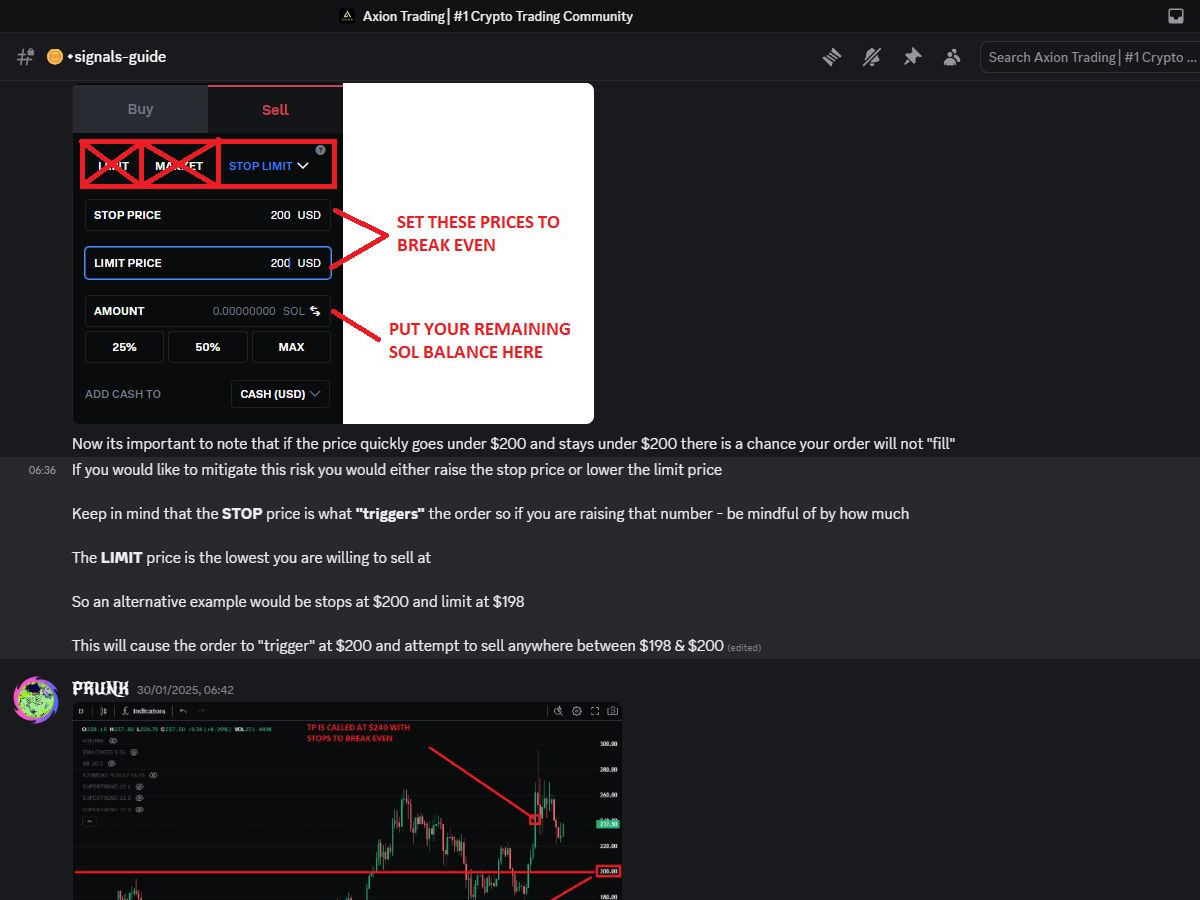
A real Axion lesson posted in the education channels